Industry Project 2025/2026: Raisio
The IDBM Industry Project Course is a seven-month journey of collaboration, exploration, and innovation, where students addressing real-world challenges in collaboration with our industry partners. This year, we’re inviting you to follow 10 different stories as our teams move through different stages of their project journeys.
Our IDBM industry project with Raisio focused on cardiovascular health and ecosystem strategy. From the beginning, the topic felt important but also difficult to approach. It is a major public-health issue, yet in everyday life it often remains quite invisible. That made it a challenging space to work in. Understanding it meant looking more closely at people’s habits, triggers, as well as the broader societal conditions that shape behaviour.
We started the project with a strong team setup and a client that clearly cared about the topic. At the same time, the approach was largely up to us to define, with a clear intention of exploring what kind of ecosystem could bring together the most relevant stakeholders to support change in cardiovascular disease prevention and raise awareness of the issue. Rather than narrowing down too quickly, we chose to keep the scope broad for a relatively long time and build a stronger understanding of the problem before moving toward solutions.
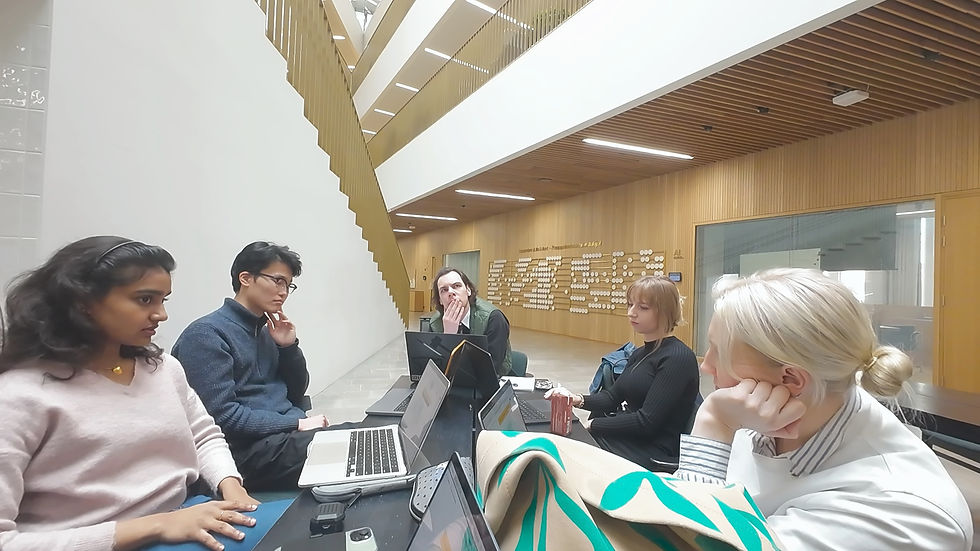
Finding the right research methods and framework was paramount both for developing an understanding of the problem within our team and for being able to include health professionals in the ongoing exploration of the topic. This remained an important part of the process even when moving from an exploratory phase to innovating, because the challenge could easily have stayed too abstract without a clear way of mapping it and returning to discuss the main goals.
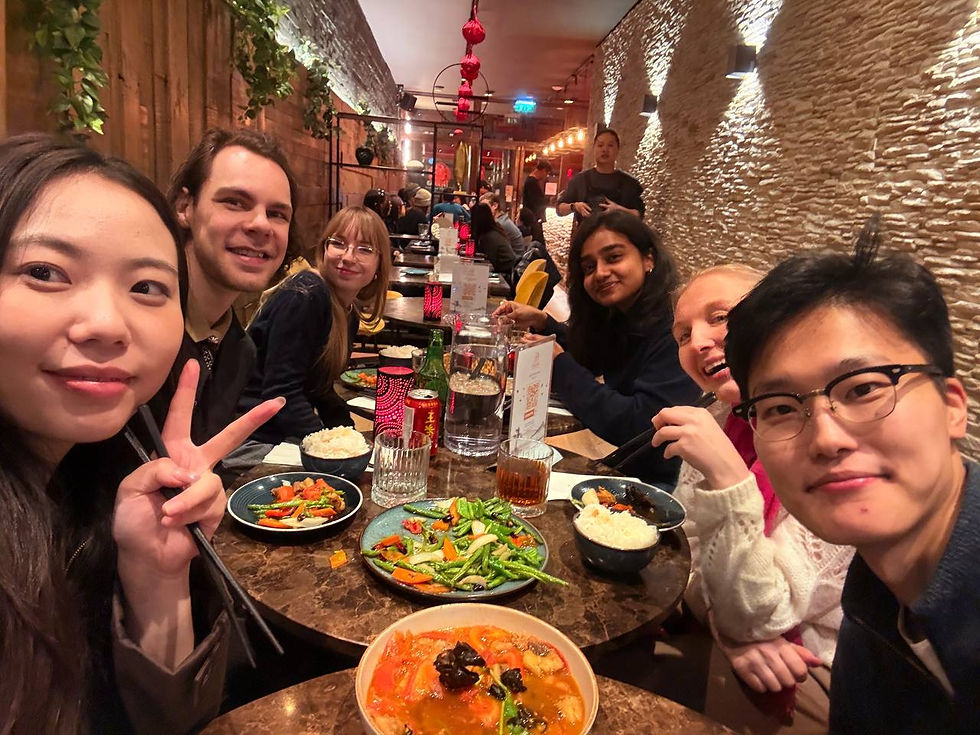
As part of the project, we travelled to Amsterdam and Athens. The two cities were chosen as useful contrasts. In Amsterdam, we wanted to look more closely at local consuming culture and at a context where functional foods and related products seemed to have a more visible place in the market.
Our first views of Amsterdam and the preceding morning (Photos by Sonja Kainulainen)
In Athens, we approached the topic more through Mediterranean cuisine and lifestyle. Looking at these two settings side by side helped us test assumptions and see what kinds of patterns would hold across very different contexts.
Alongside interviews and observations, we also had the chance to experience the everyday settings and rhythms of Athens. (Photos by Sonja Kainulainen)
After the trips, it became clearer to us that the relevant strategy depends heavily on the context. In some places, education may have more influence. In others, the market, public institutions, or consumer habits may matter more. Because of this, it was difficult to think in terms of one solution that would work everywhere.
Looking at Amsterdam and Athens side by side was useful as it helped us focus less on surface differences and more on what seemed to remain constant across both. The expert interviews pointed in the same direction: dietary change is difficult, and prevention only becomes relevant when it connects to everyday life.

As the project progressed, we also became more precise about the kind of value we could create for Raisio. That understanding developed gradually through ideation, stakeholder work, and discussions with the client.
Our final concepts approached the challenge through different stakeholders and different entry points, including work life, innovation platforms, and education at the school system level, as well as the ways people learn to think about food, health, and behaviour.
One of the most valuable aspects of the collaboration was Raisio’s approach to the process. They were consistently interested not only in the outcomes, but also in the exploration behind them: what we were learning, which insights were emerging, and where those insights might lead. That gave the project room for serious inquiry.

For our team, the project underlined a fairly simple point: in a space like this, value cannot be built around the product alone. It also depends on how well a company understands the situations, routines, and structures that shape people’s everyday choices.
Learn more about the team:
Koki Kanai (IDBM BIZ)
Priyanka Jayakumar (IDBM SCI)
Sára Halásová (IDBM ARTS)
Sonja Kainulainen (IDBM BIZ)
Vasilis Rantzos (IDBM BIZ)
Yueer Peng (IDBM ARTS)