Industry Project 2025/2026: FICEBO
The IDBM Industry Project Course is a seven-month journey of collaboration, exploration, and innovation, where students addressing real-world challenges in collaboration with our industry partners. This year, we’re inviting you to follow 10 different stories as our teams move through different stages of their project journeys.
FICEBO’s premise? Simple: if there is no strong evidence that a medical intervention works, it is a suitable candidate for rigorous study. Once we set out on this path, it quickly became clear that even for very common surgical procedures, the evidence base was astonishingly weak. In many cases, there was not even proof that surgery was more effective than non-surgical care. (Source: FICEBO)
Who is the client?

FICEBO (Finnish Centre for Evidence-Based Orthopaedics) is an academic research group at the forefront of placebo-controlled surgical trials. Based in Finland's capital region, the alliance is a collaboration between HUS (Helsinki University Hospital) and the University of Helsinki. FICEBO brings together healthcare professionals and researchers with the shared goal of reducing unnecessary surgeries by comparing surgical interventions against non-surgical treatment options. By generating robust evidence on treatment effectiveness, the group aims to ensure that healthcare resources are directed where they matter most: high-quality research and patient care.
What was the problem statement?
The challenge FICEBO presented to us centered on one key unknown in clinical trials: what actually happens in patients' day-to-day lives between clinical appointments. Filling even part of this knowledge gap could lead to richer data, more accurate research findings, and ultimately, better patient care.
Clinical trials often involve multiple patients progressing through different stages of their treatment and recovery, making consistent and comprehensive data collection both complex and resource-intensive. To support FICEBO's research, we set out to explore how patients' everyday experiences could be captured more effectively. Our goal was to design a tracking solution that patients would be naturally motivated to incorporate into their daily routines, enabling researchers to collect richer longitudinal data with minimal additional burden.
Our project journey

We began in January with a broad brief and quickly realised that entering the world of clinical research required us to first slow down and learn. During the early phase, we immersed ourselves in musculoskeletal (MSK) recovery, patient-reported data, clinical research practices, digital health technologies, AI, and the ethical and regulatory requirements surrounding sensitive health data. Regular discussions with FICEBO helped us challenge our assumptions and gradually narrow the focus of the project.

One of the early highlights was our field trip to London and Oxford. Meeting clinical researchers, data specialists, and digital health professionals allowed us to see how research processes work in practice. The conversations brought the everyday realities of clinical research to life, from strict protocols and fragmented digital systems to the challenge of keeping participants engaged over long follow-up periods. Against what could be expected, the trip did not simplify the challenge. It actually made it more complex, but also much more tangible.

Back in Finland, we continued our empirical research through interviews with researchers,
healthcare and digital health experts, and patients with experience of MSK recovery. We carefully analysed the material and searched for recurring themes and tensions across different stakeholder perspectives. This was a key point: we began to understand the project as a balancing act between patient needs, research value, trust, usability, and institutional feasibility.

We then moved into an intensive ideation phase. Through collaborative workshops, mind mapping, brainstorming, and “How Might We” questions, we generated a wide range of ideas and gradually narrowed them down into three distinct design visions. Presenting these visions to the FICEBO team and our faculty mentors helped us compare different directions and identify which elements were most relevant and realistic to develop further.

The selected direction was transformed into an interactive prototype and tested with patients
recruited through the HUS patient panel. Instead of asking participants simply whether they liked the prototype or not, we used it to spark conversations about their routines, preferences, motivations, and concerns. Their feedback challenged some of our assumptions and helped us refine the concept around what people would genuinely find understandable and meaningful. We also used our second field trip to Amsterdam as an opportunity to discuss the final concept with medical researchers and digital health product experts, gaining external perspectives that allowed us to stress-test the solution beyond its original context.
The Solution
After six months of work, a lot of iteration, and quite a few directions we considered and let go of, the solution we landed on is this: an AI-driven platform that transforms patients' stories into new knowledge about MSK recovery.

It starts with an app, where patients log their recovery story every other day. Those stories are aggregated into a database that holds information nobody has ever collected before. The data is then analysed, and the analysis flows back out in two directions. Patients get insights into their own recovery. Researchers get patterns across many recoveries, which they can turn into new hypotheses and new research questions, and in time, into new medical knowledge. So the system has two distinctive user-facing parts.
On the patient side, every patient is unique and every recovery looks different, so there are multiple ways to report the experience. You can simply mark where you have pain and how severe it is. You can keep a written or a voice diary. You can have a conversation with a chatbot. Or, if you only have a few minutes, you can answer a few quick questions. How you log follows your own goals, preferences, and personality. Patients also get something back: a graph showing progress over time, tips and suggestions drawn from their own patterns, and questions they can ask about their own recovery. Researchers, meanwhile, can see all the data the patients have logged, the analysis performed on it, and the hypotheses generated from it. There is also an AI chat, where they can ask questions directly about the data.
The impact of all this unfolds over time. Immediately, patients have greater agency over their own recovery. They understand what's going on, and they're more active in it. In the medium term, patients can share what they've logged with their clinicians, thereby improving care accuracy. Researchers start discovering new patterns in recovery, which lead to new research questions and new clinical research. In the long term, that research becomes new validated medical knowledge, which flows back into the system and can be used by doctors, leading to better personalised care pathways for each patient. This change also allows better use of resources in healthcare overall. While this solution was created for MSK recovery, the same approach could be applied across any field of medicine in the future, potentially yielding an even greater impact.
Finally, the process culminated at the IDBM Impact Gala, where we translated months of research, iteration, and teamwork into a concise pitch and an interactive booth experience. However, the Gala did not mark the end of the project. The work will continue over the summer in collaboration with FICEBO, as the concept moves into its next phase of development.
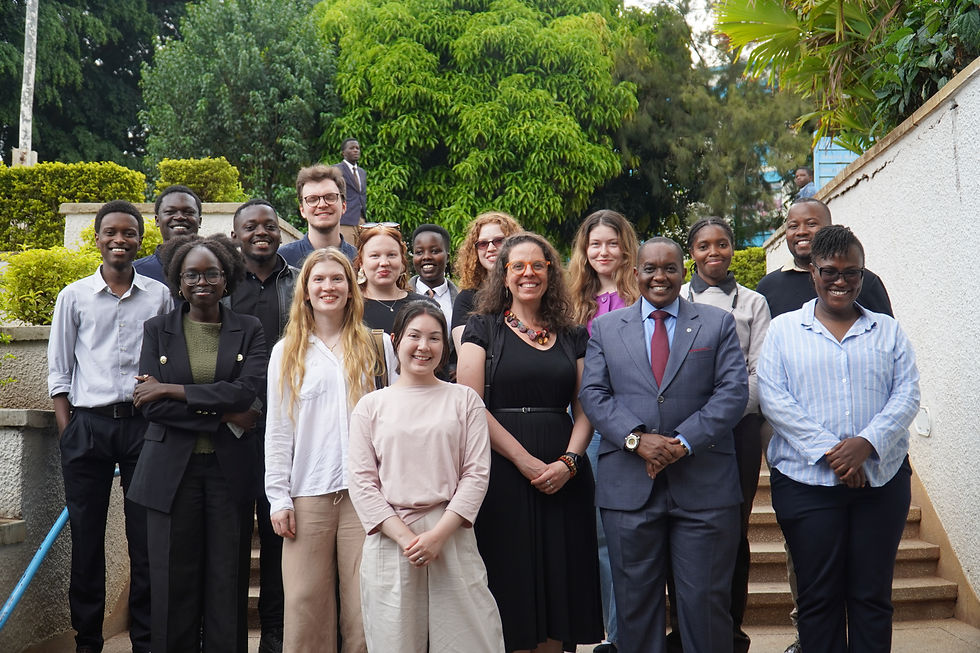
Our team at IDBM Impact Gala
Learn more about the team:
Adil Khan (IDBM ENG)
Laura Lempiäinen (IDBM BIZ)
Aneesh Nayak (IDBM ARTS)
Eli Saaresto (IDBM BIZ)
Venla Salminen (IDBM BIZ)
Noa Zeevi (IDBM ARTS)